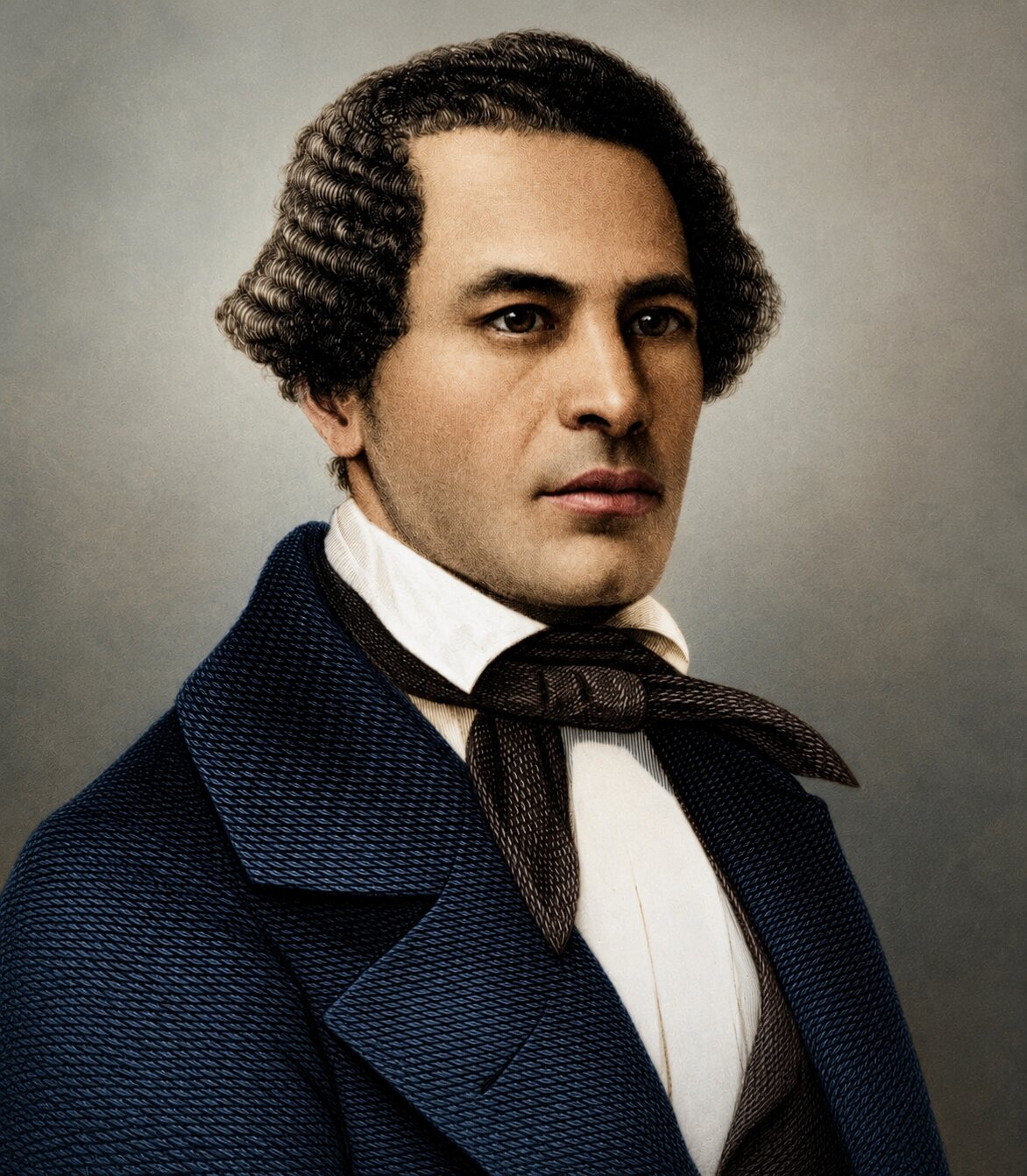
Nathaniel Wells was born into slavery on the island of St Kitts in 1779. His father was William Wells, a wealthy Welsh plantation owner, and his mother was an enslaved woman. William Wells recognised his son and arranged for him to be educated and eventually freed. When William died, he left Nathaniel a substantial inheritance — making him one of the wealthiest men in Wales.
Nathaniel Wells settled in Piercefield, Monmouthshire, where he purchased a magnificent estate and became a respected member of local society. He served as a Justice of the Peace and in 1818 was appointed High Sheriff of Monmouthshire — making him the first Black man to hold that office in British history.
As High Sheriff, Nathaniel Wells presided over the county's legal administration, overseeing courts and maintaining order. His appointment was remarkable not just for its historical significance but because it demonstrated that — at least in his case — wealth and standing could transcend the racial prejudices of the era.
Wells married twice and had fourteen children. He lived a life of privilege that set him apart from the vast majority of Black people in Britain at the time, most of whom were living in poverty as former slaves or sailors. His story is both inspiring and complex — a man who escaped slavery through inheritance rather than resistance, yet who achieved a landmark that would not be repeated for generations.
Nathaniel Wells died in 1852. His story was largely forgotten for over a century before historians rediscovered his remarkable life. Today he stands as a testament to the presence and achievement of Black people in Britain long before it was widely acknowledged.
- First Black High Sheriff in British history (1818)
- One of the wealthiest landowners in Wales in the early 19th century
- Justice of the Peace for Monmouthshire
- Owner of Piercefield — one of the most celebrated picturesque estates in Britain
- Father of fourteen children, establishing a prominent British family line
- Education opens every door.. Nathaniel's father ensured he was educated. That education was the foundation of everything that followed.
- Presence matters.. By living as a respected public figure, Wells made it impossible for the society around him to ignore Black achievement.
- History is hidden.. Wells was forgotten for nearly two centuries. BETA Archive exists precisely to prevent that from happening again.
- Complexity is part of the story.. Not every Black pioneer was a freedom fighter. Wells' story is nuanced — and that nuance is worth understanding.