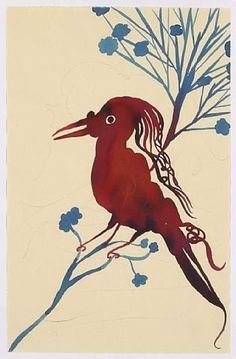
Christopher Ofili was born on 10 October 1968 in Manchester to Nigerian parents, and studied painting at the Chelsea School of Art before completing an MFA at the Royal College of Art in London in 1993, developing a richly layered painting style influenced by artists including Jean-Michel Basquiat and the cave art he encountered on a travel scholarship to Zimbabwe.
Ofili became associated with the Young British Artists movement of the 1990s, developing a distinctive visual language that combined resin, glitter, map pins, collage and elephant dung into intricate, multilayered compositions exploring Nigerian heritage, popular culture, religion and race.
In 1998 Ofili became the first Black artist to win the Turner Prize, Britain's most prestigious contemporary art award, for an exhibition that included his more sombre painting No Woman No Cry, created as a tribute to Doreen Lawrence's grief following her son Stephen's murder.
In 2003 Ofili was selected to represent Great Britain at the Venice Biennale, working in collaboration with architect David Adjaye on the British Pavilion, cementing his status as one of the most significant contemporary British painters of his generation.
In 2005 Ofili relocated from London to Trinidad and Tobago, where his palette and approach evolved toward pared-down forms drawing on Caribbean landscape, mythology and carnival culture; he was appointed CBE in the 2017 New Year Honours for his contribution to the arts, and his work remains held in major collections including the Tate, MoMA and the Museum of Contemporary Art, Los Angeles.
- First Black artist to win the Turner Prize, 1998
- Represented Great Britain at the 2003 Venice Biennale
- Work held in the permanent collections of Tate, MoMA and MOCA Los Angeles
- Appointed CBE for services to the arts, 2017
- Exhibited solo at The National Gallery, London, 2017
- Heritage can become the foundation of an entirely original visual language. Ofili's exploration of his Nigerian background produced a painting style unlike any other in contemporary British art.
- Relocation can transform artistic direction. Ofili's move to Trinidad in 2005 brought a deliberate simplification and evolution to his work, informed by his new surroundings.